Feiji helps improve panel packing and reduce damage
A listed home-furnishings maker uses Feiji to help its developers improve packing algorithms. Requirements, code changes and order trials become placement diagrams and packing lists that people on the floor can check and use.
A listed home-furnishings maker
Panel packing
5% → ~3%
packing damage ratebefore and after
Turn packing requirements into plans people can use
The relevant business of a listed home-furnishings maker handles annual transactions worth tens of millions of yuan, with thousands of panels entering each shipping batch. Panels vary in dimensions and thickness. Packages must be easy to move while providing adequate support and protection. Previously, some combinations were spread across too many packages. Poor placement, filling or securing could also lead to transit damage and the additional work of replacements and redelivery.
The company introduced Feiji to help its development team improve packing algorithms. From requirements and code changes to order trials and result checks, the team reworked panel combinations and produced placement diagrams and packing lists to make the plans easier to carry out on the floor.
Challenges and approach
Many panel sizes make protection difficult. Large batches require repeated decisions about thin-panel support, edge protection and suitable combinations.
Improve combinations and placement. Put confirmed packing requirements into the algorithm to guide protection and placement on the floor.
Fragmented grouping creates more packages. Comparing combinations one by one leaves floor staff little room to explore consolidation.
Recalculate combinations across the order. Find compatible panels and avoid unnecessary splitting while meeting packing requirements.
Placement still depends on local judgement. After receiving group assignments, workers must work out how each layer should be arranged.
Provide placement diagrams and packing lists. Turn calculated results into an operating reference that people can inspect and check.
Improve support and combinations to lower damage from 5% to about 3%
Each batch brings thousands of panels with different dimensions and thicknesses into packing. Thin panels can bend or break if support underneath is insufficient. Exposed edges, inadequate filling and loose securing also raise the risk of transit damage. Previously, workers used the group assignments to work out the actual arrangement themselves. Consistent protection was harder to maintain under a heavy workload.
Feiji helped developers clarify requirements and translate panel combinations, support and placement conditions into checks the algorithm could execute. Order trials exposed problems and informed code adjustments. The algorithm produced combinations and placement diagrams. Floor staff checked the actual panels against them and completed filling, edge protection and strapping, combining calculation with physical protection.
Improvements to grouping and protection reduced the burden of transit damage. Before the changes, about 50 in every 1,000 packages were damaged; afterwards, that figure was about 30. The damage rate fell from 5% to about 3%, reducing the need for replacement parts and repeat shipments.
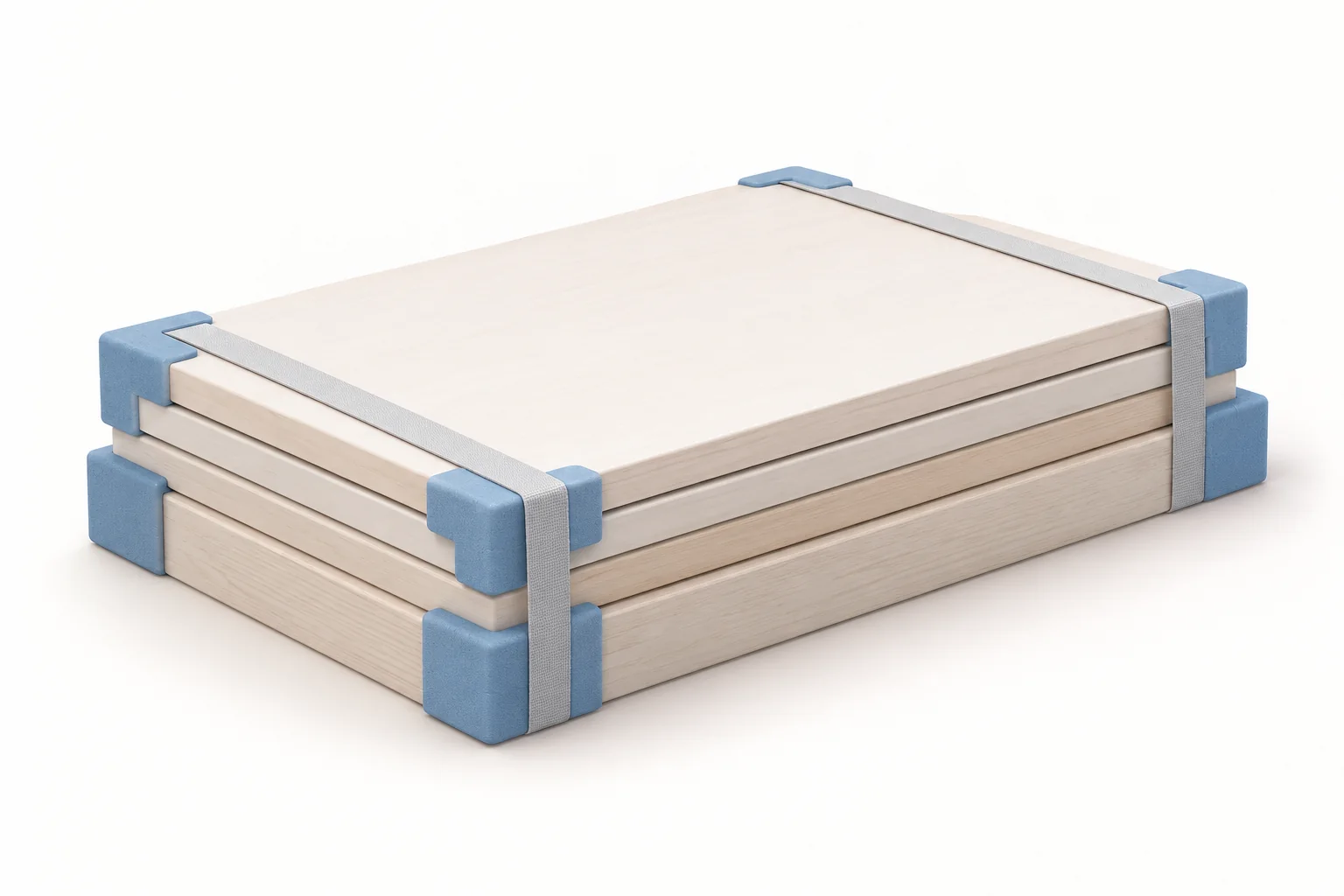
Recalculate combinations for over 1,000 fewer packages in total
Package count directly affects sealing, labelling and handling. Previously, separate grouping was convenient to arrange but left opportunities to combine panels. With a continuous flow of batch orders, floor staff could not easily try different layouts for every order while balancing package count, dimensions, weight and placement requirements.
Feiji helped developers improve the combination process. The algorithm regrouped panels within the same order, compared package counts and checked whether combined packages still met requirements. Business staff compared old and new plans and reviewed placement details before passing usable results to the floor, reducing repeated manual trials.
As of reporting, the improvements had reduced the cumulative package count by over 1,000. Fewer packages meant fewer sealing, labelling and handling operations, reducing repetitive work in high-volume shipping.
Give workers a layer-by-layer placement reference
A grouping result must ultimately work on the packing floor. Previously, workers still needed to decide which panels belonged at the bottom, how to combine each layer and where extra protection was needed. Complex combinations could require rearrangement or another round of clarification, adding communication and adjustment work.
Feiji helped developers turn algorithm results into three-dimensional placement diagrams and Excel lists showing the panels and layers in each package. Workers could compare the plan with physical items, check support positions and complete protection steps. Physical differences and cases that needed to retain their original packaging remained subject to human review.
Placement decisions that previously had to be made layer by layer on the floor now had a visual reference. Workers could focus on physical differences, filling and securing. When a problem arose, they could refer to a specific package, helping developers improve the algorithm further.

Keep calculation and on-site protection working together
Working with Feiji, the development team gradually translated packing requirements into plans that could be calculated, checked and carried out. This supported fewer packages, better protection and more consistent operations. As order volumes and product ranges grow, the team can continue to use shipping and after-sales feedback to improve the algorithm. Extending this approach to load planning or exception analysis remains a possible next step.